• OSCE Meetup: Creating reproducible research code

    The goal of reproducible data analysis is to document and communicate your analysis so that others can easily follow your steps and replicate its results. We will discuss software environments, version controls, and software documentation. In the end, we will share ideas on how to make the research community more aware of the importance of […]

  • OSCE Meetup: Jupyter – integrating notebooks in your research

    Notebooks have received an increasing amount of attention in the past few years as they provide an interface where code, data, and narrative can meet. By combining these elements in one document, they help in documenting and communicating your analyses. In this talk, I’ll give a brief introduction to Jupyter and also touch on more […]

  • OSCE Meetup: Data Foundry — Open Data for Design Research at TU/e

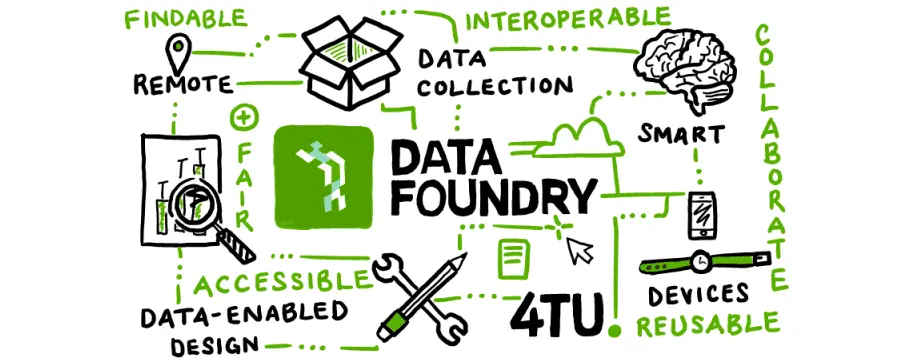
    Design Research is going through a phase of digital transformation: in our research, we increasingly rely on data collected from remote contexts, engage in data-enabled (co-)design, and work with data-intensive tools and methods. Data Foundry was developed in the last 2-3 years to build a basis for such practices at the department level, to allow […]

  • OSCE Meetup: Should you sign your reviews?

    Peer review is one method of quality control in scientific publishing. A topic of discussion in the open science community is open peer review, where the peer review reports are shared alongside the published article. As a reviewer, you often have the possibility of signing your review, to disclose your identity to the authors. In […]

  • OSCE Meetup: The Publishing Trap board game

    This event is postponed until November The Publishing Trap is an open-source board game that allows participants to explore the impact of scholarly communications choices and discuss the role of open access in research by following the lives of four researchers – from doctoral research to their academic legacies. The game is designed to be […]